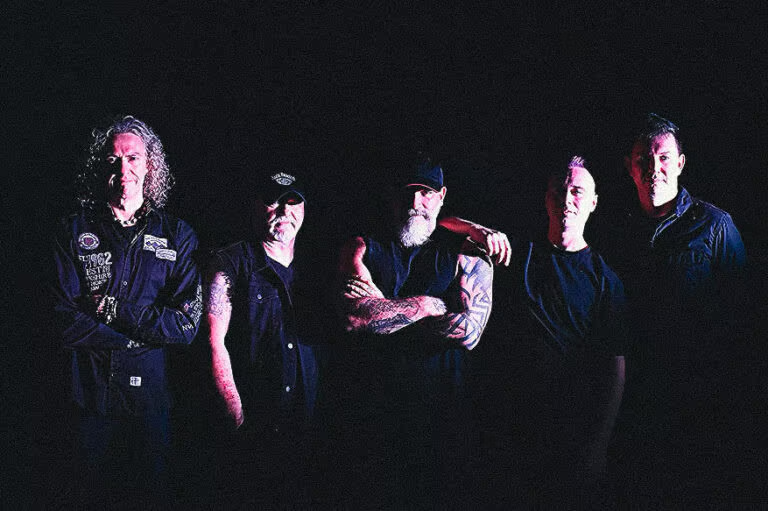
When Kitty Wu released Privacy in 2001, the Copenhagen quartet emerged as one of Denmark’s most intriguing indie acts. Two years later came Rules of Transportation—an enigmatic, nocturnal masterpiece that fused post-punk tension, cinematic melancholy, and lyrics that seemed to arrive from somewhere deep beneath the surface of ordinary life.

Then, almost without warning, the signal faded.

Design. Build. Launch. No Code Needed.
From portfolio websites to full webshops – Elementor lets you build custom WordPress sites visually, fast and beautifully. Join 14M+ users who choose freedom, flexibility, and full design control.
What happened to the Danish band that carved out its own dark and unmistakable territory? Were they ultimately crushed by an industry demanding accessibility and conformity? Or did they simply exhaust the creative fuel that powered their unique artistic engine?
Critics consistently praised Kitty Wu. Their records received strong reviews, and their artistic credibility was rarely in doubt. Commercial success, however, proved elusive
The band borrowed its name from Kitty Wu, a mysterious character in Paul Auster’s Moon Palace (1989). Fittingly, the musicians themselves cultivated an aura of mystery. Their music inhabited an uncompromising grey zone where irresistible melodies collided with stark, cryptic, and often unsettling lyrics.

The Easiest Way to Stay GDPR-Compliant
For Kitty Wu, this territory was not merely a stylistic choice—it was an artistic mission. They ventured fearlessly into the shadows between beauty and alienation, creating songs that rewarded listeners willing to follow them there.
Vanishing Without a Trace
Since 2017, however, the band appears to have slipped almost entirely beneath the radar. No official announcement confirms a breakup. No upcoming albums, tours, reunion shows, or even isolated performances suggest an active creative life. Online, the trail simply grows cold.
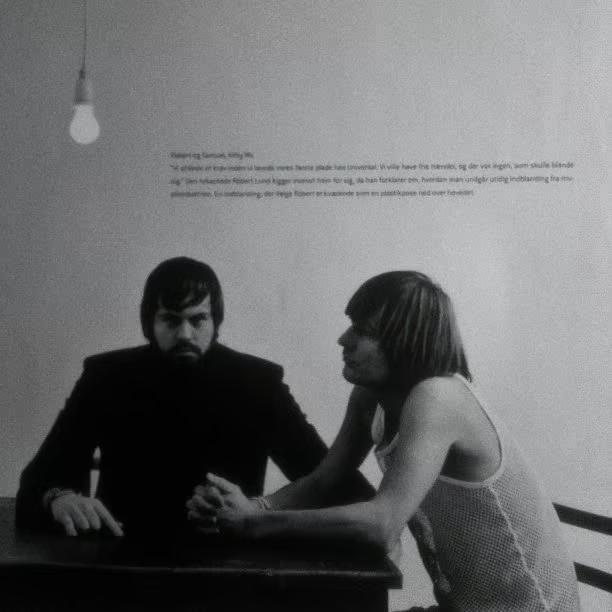
For most bands, such silence would seem unusual. For Kitty Wu, it almost feels like a final artistic gesture—an exit as enigmatic as the music itself. During their most active years, from 2001 to 2012, Kitty Wu collaborated with an impressive roster of acclaimed producers and musicians. Their orbit included connections to My Bloody Valentine, Guy Fixsen (known for his work with Pixies), and Rob Ellis of PJ Harvey fame.
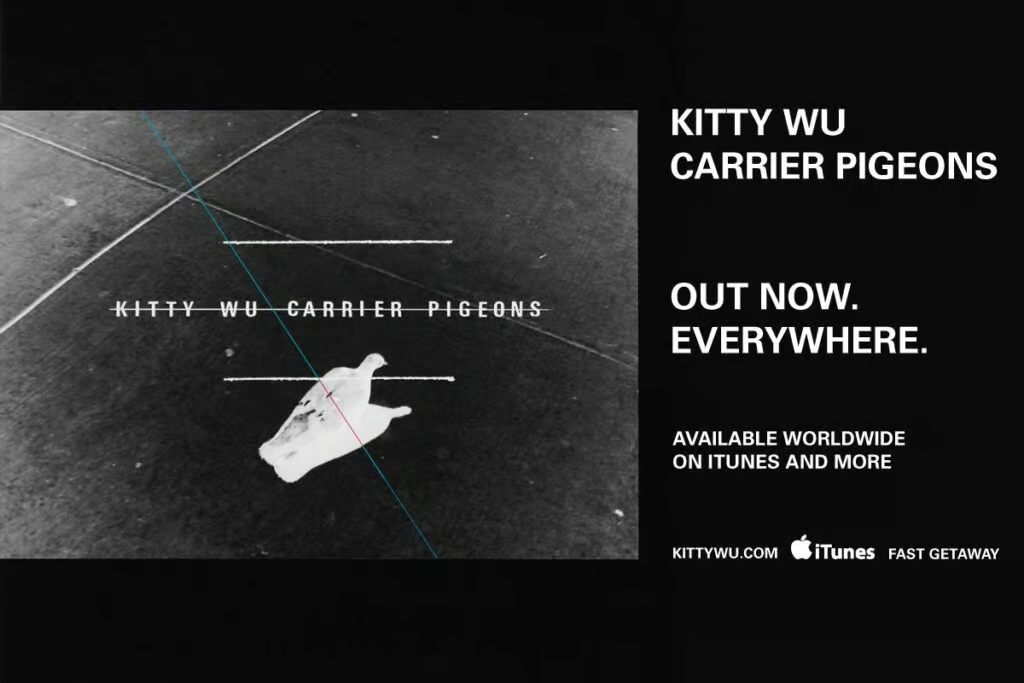
Their final album, Carrier Pigeons (2012), was mixed by John O’Mahony at the legendary Electric Lady Studios in New York—a fittingly prestigious setting for a band whose ambitions always reached beyond the confines of the Danish music scene.
Critics consistently praised Kitty Wu. Their records received strong reviews, and their artistic credibility was rarely in doubt. Commercial success, however, proved elusive.
In Denmark, they never achieved a true breakthrough. Internationally, they came tantalisingly close without ever crossing the threshold. Yet their résumé remains impressive: performances at Roskilde Festival and a support slot for Muse during the Scandinavian and Finnish leg of the British band’s 2004 European tour.
These were not opportunities handed out lightly. Kitty Wu earned them.
The Dark, Poetic Echo Remains
Today, Kitty Wu occupies a curious place in Danish music history: celebrated by those who discovered them, largely overlooked by the wider public, and absent long enough to acquire an almost mythical status.
Perhaps their disappearance is permanent. Perhaps another transmission will emerge one day from the shadows.
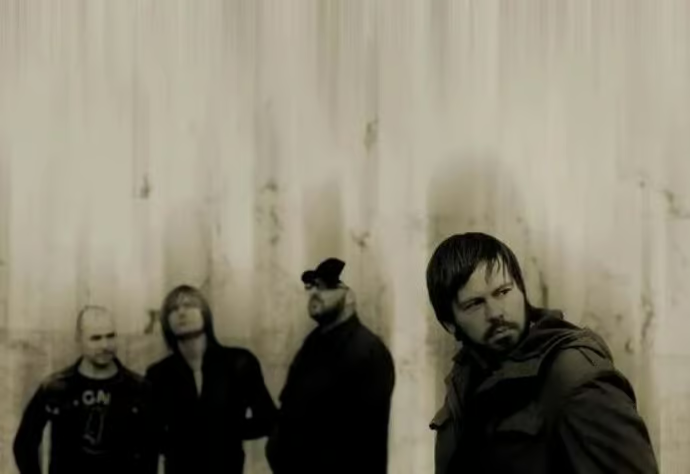
Until then, their records remain as evidence that something rare once existed in the Danish underground—a band that chose mystery over compromise, atmosphere over accessibility, and artistic conviction over commercial certainty.
And in our view, they deserved far more attention than they ever received.